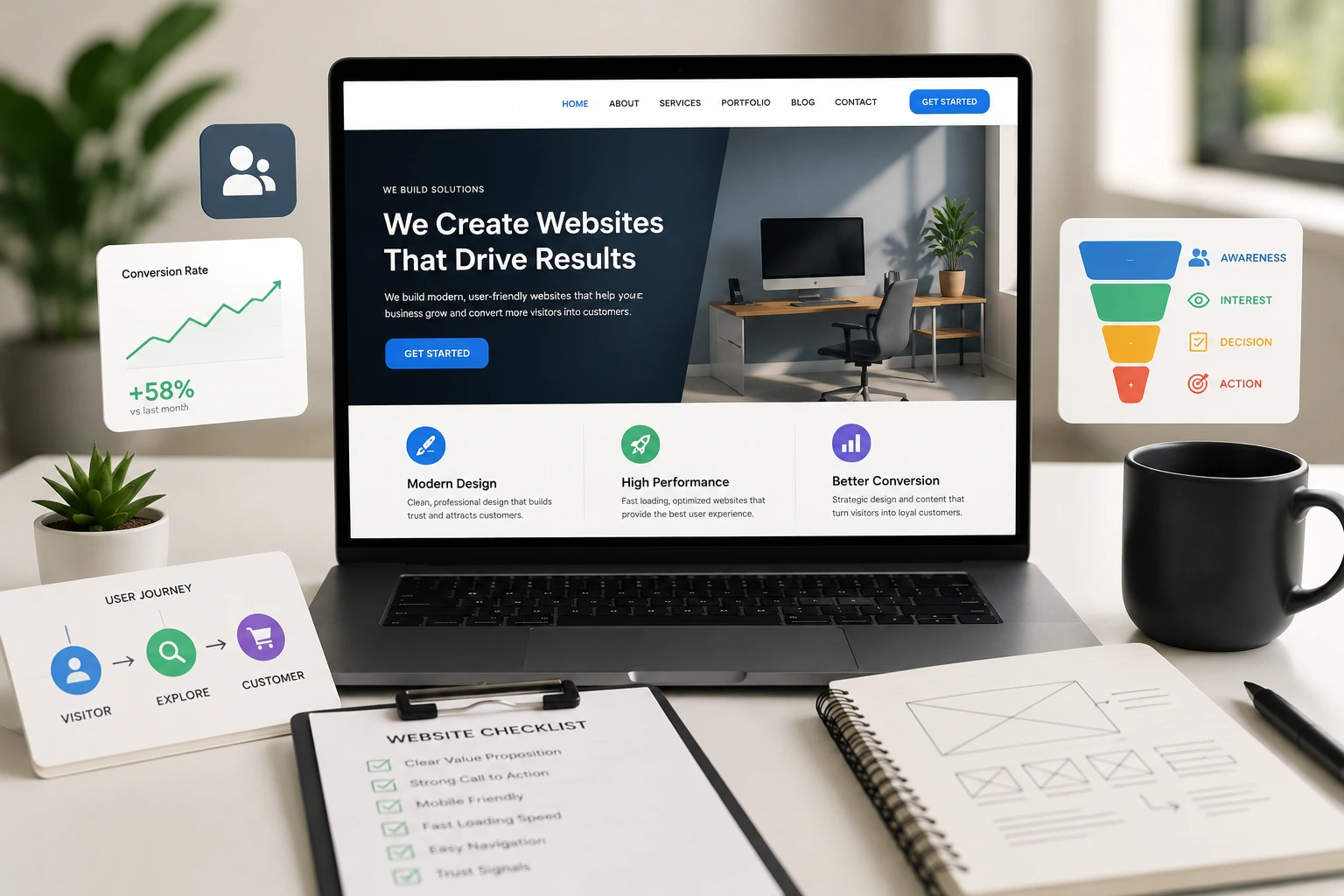
How to Design a Website That Converts Visitors Into Customers
A website should do more than simply look attractive. A successful business website should build trust, explain your services clearly, and guide visitors toward taking action.
Whether your goal is to generate leads, receive inquiries, book appointments, or increase online sales, a conversion-focused website can help turn more visitors into customers.
In this guide, you'll learn
how to design a website that converts visitors into customers.
What Is a High-Converting Website?
A high-converting website is designed to encourage visitors to complete a specific action.
Depending on your business, that action could be:
Buying a product
Requesting a quote
Filling out a contact form
Booking an appointment
Calling your business
Signing up for a service
Making an inquiry
The goal is to make the next step clear and easy for visitors.
1. Start With a Clear Value Proposition
When someone visits your website, they should quickly understand what your business offers and why they should choose you.
Your homepage should clearly communicate:
What you offer
Who you help
What makes you different
What visitors should do next
A clear message helps visitors understand your business without having to search through multiple pages.
If you need a professional online presence for your business, you can explore
SA IT Solutions to see how modern digital solutions can support business growth.
2. Create a Strong Homepage
Your homepage is often the first impression visitors have of your business.
A conversion-focused homepage should include:
A clear headline
Short supporting content
Strong call-to-action
Relevant visuals
Key benefits
Services or products
Customer reviews
Trust signals
Contact information
The design should guide visitors naturally from understanding your business to taking action.
3. Use Clear Calls-to-Action
A
call-to-action (CTA) tells visitors what to do next.
Examples include:
Get a Free Quote
Contact Us
Book a Consultation
Start Now
Shop Now
Request a Demo
Get Started
Use clear and specific CTA buttons throughout important pages.
Instead of using a vague button such as
"Click Here", use an action-oriented message that explains what visitors can expect.
4. Build Trust With Social Proof
Visitors are more likely to become customers when they trust your business.
You can build credibility with:
Customer reviews
Testimonials
Case studies
Client logos
Certifications
Awards
Portfolio examples
Showing your previous work can also help potential customers understand the quality of your services. You can showcase your previous projects through your
website design and development portfolio.
5. Make Your Website Mobile-Friendly
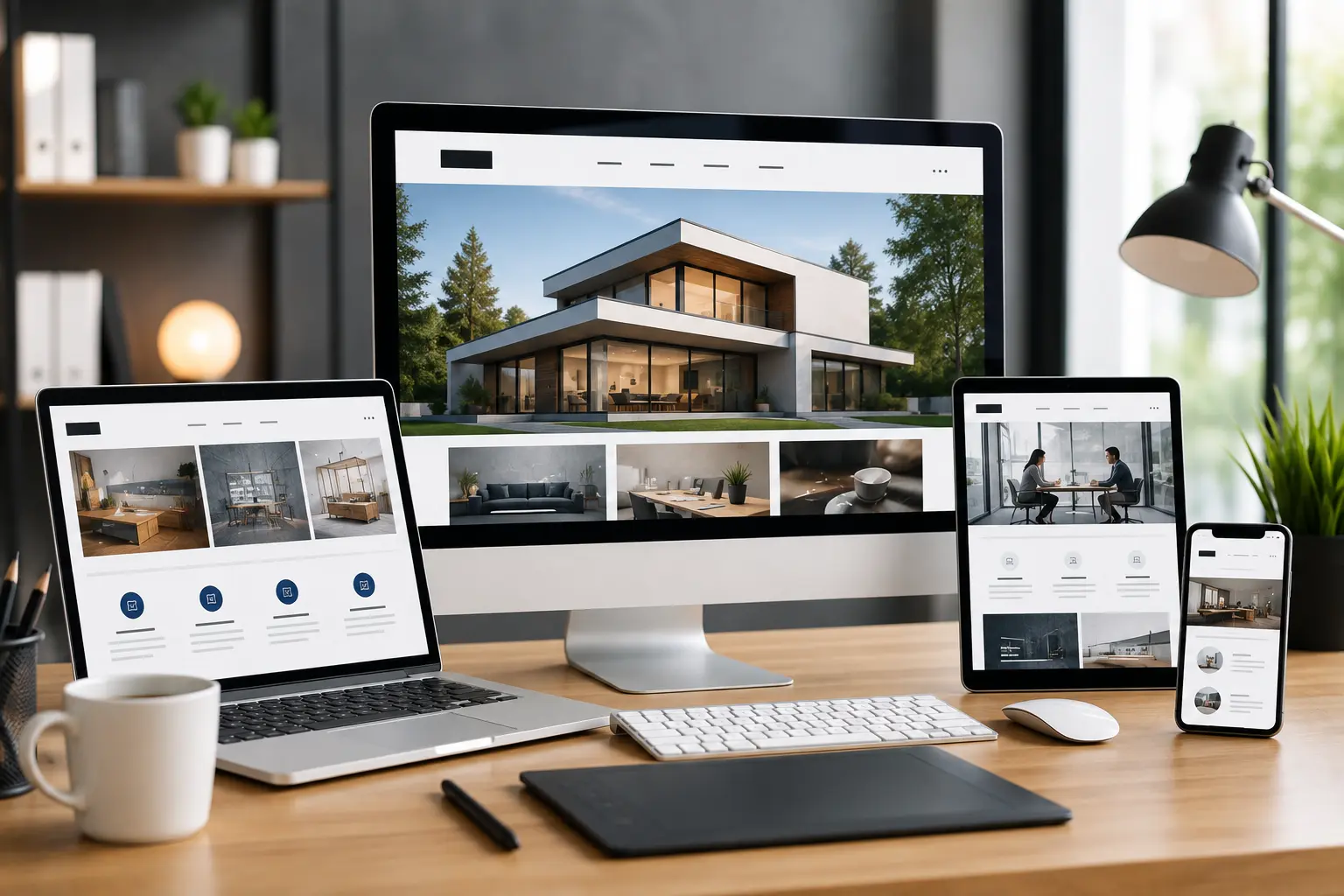
Many people browse websites using smartphones. If your website does not work properly on mobile devices, you may lose potential customers.
A responsive website should:
Adapt to different screen sizes
Have readable text
Use easy-to-tap buttons
Load quickly
Provide simple navigation
Make forms easy to complete
Professional
website design services can help create a responsive website that provides a consistent experience across mobile, tablet, and desktop devices.
6. Improve Website Speed
A slow website can frustrate visitors and increase the chances that they leave before taking action.
To improve website performance:
Compress images
Use optimized website code
Reduce unnecessary plugins and scripts
Use caching
Choose reliable hosting
Optimize large media files
Monitor website performance
Website speed is important for both user experience and search engine optimization.
7. Keep Your Website Design Simple
A professional website does not need to be complicated.
Too many colors, animations, popups, buttons, and design elements can distract visitors.
Use:
Clear navigation
Consistent typography
Proper spacing
Relevant images
Simple layouts
Easy-to-understand content
Good web design should make it easier for visitors to find information and take action.
If you need a website built around your specific business requirements,
professional web development services can help turn your design and functionality requirements into a complete website.
8. Create Easy-to-Use Navigation
Visitors should be able to find important information without searching through complicated menus.
A business website should typically provide easy access to pages such as:
Home
About
Services
Products
Portfolio
Blog
Contact
Keep your navigation simple and organized. Important pages should never be difficult to find.
9. Write Content That Focuses on Customer Needs
Your website content should focus on the problems your customers want to solve.
Instead of only talking about your company, explain:
What problem you solve
How your service works
What benefits customers receive
Why customers should trust you
What makes your solution different
Useful content can help visitors understand your value and move closer to making a decision.
10. Make Your Forms Simple
If you want visitors to submit an inquiry, avoid asking for unnecessary information.
A simple lead generation form might only require:
Name
Email
Phone number
Message
Long and complicated forms can discourage visitors from completing them.
For important conversions, make the process as simple as possible. If visitors are ready to discuss a project, make your
contact page easy to find and use.
11. Use High-Quality Visuals
Images and videos can help visitors understand your products or services.
For example:
Ecommerce businesses can use professional product photography.
Service businesses can show completed projects.
Agencies can showcase their portfolio.
Software companies can use product screenshots or demonstrations.
Use visuals that support your message instead of adding images simply for decoration.
12. Create Dedicated Landing Pages
If you are running advertising campaigns, sending visitors to your homepage may not always be the best option.
A dedicated landing page can focus on one specific offer and one primary conversion goal.
For example, an advertising campaign for
website design services can send visitors to a focused landing page explaining the service, benefits, process, and CTA.
13. Make Your Website SEO-Friendly
Conversion and SEO can work together.
An SEO-friendly website can attract people who are actively searching for your products or services.
Important areas include:
Keyword research
Search intent
SEO titles
Meta descriptions
Heading structure
Internal linking
Technical SEO
Mobile optimization
Helpful content
If you want to attract more organic traffic and reach potential customers through search engines, learn more about our
search engine optimization services.
14. Create Strong Product and Service Pages
Your product or service pages should answer the questions potential customers have before making a decision.
Include information such as:
Features
Benefits
Pricing when appropriate
Process
FAQs
Reviews
Images
Guarantees or policies
Clear CTA
For online stores, the website experience is even more important. A well-designed
ecommerce website can make it easier for customers to browse products, understand offers, and complete purchases.
15. Test and Improve Your Website
Even a well-designed website can be improved.
Use analytics tools to understand:
Which pages receive the most traffic
Where visitors leave
Which CTAs receive clicks
Which forms are completed
Which traffic sources generate customers
You can test different headlines, CTA text, layouts, images, and forms to identify what performs better.
Common Website Conversion Mistakes
Avoid these common mistakes:
Unclear headlines
Too many CTAs
Slow loading pages
Poor mobile design
Complicated navigation
Weak product descriptions
No customer reviews
Long contact forms
Too much unnecessary text
Missing contact information
Fixing these issues can create a smoother experience for potential customers.
Final Thoughts
A website that converts visitors into customers combines
good web design, clear messaging, strong calls-to-action, trust signals, fast performance, mobile responsiveness, and useful content.
The goal is not simply to create a beautiful website. Your website should guide visitors toward a clear action while making it easy for them to understand why your business is the right choice.
If you need a modern website designed to support your business goals, explore
SA IT Solutions website design services or
digital marketing services to build a stronger online presence and reach more potential customers.
Frequently Asked Questions
What makes a website high-converting?
A clear value proposition, strong CTA, simple navigation, fast performance, mobile-friendly design, trust signals, useful content, and an easy conversion process can help create a high-converting website.
How can I increase website conversions?
Improve your website's messaging, CTA placement, page speed, mobile experience, trust signals, forms, and overall user experience. Testing different elements can also help identify opportunities for improvement.
Does web design affect conversions?
Yes. Website layout, navigation, speed, readability, visual hierarchy, and mobile responsiveness can all influence how easily visitors understand your offer and take action.
How important is a call-to-action on a website?
A clear CTA helps visitors understand what to do next. Using specific actions such as "Get a Free Quote" or "Book a Consultation" can be more effective than vague buttons.
Can SEO help increase website conversions?
Yes. SEO can attract relevant visitors who are actively searching for your products or services. When combined with conversion-focused web design and content, that traffic can generate leads and sales.